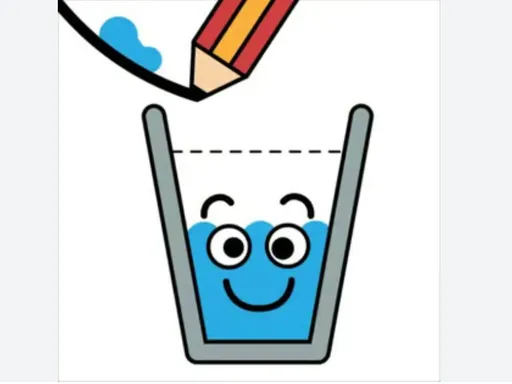
Happy Glass

Rating:
4.43
Played:
12,705
Happy Glass is a physics puzzle about a very simple mission: fill an empty cup with water so it becomes happy again. The goal is easy to read, but the solution in each level depends on line shape, angle, timing, and gravity. You draw, watch the flow, and instantly learn whether your idea works.
Happy Glass feels approachable on your first level, then becomes deeper as obstacles and physics interactions grow more complex. Tiny drawing changes can completely change the outcome, so each retry teaches something practical about water direction and control.
What Kind of Game Is Happy Glass?
Happy Glass belongs to the draw-and-solve puzzle category. Instead of matching tiles or reacting to fast enemies, you create lines that become physical surfaces in the level. Those lines can act as ramps, walls, bridges, supports, or barriers. The goal stays constant, but the puzzle shape keeps changing, which makes the game replayable without needing complicated controls.
Another key feature is efficiency scoring. In many stages, shorter and cleaner drawings are rewarded with better stars. That means a successful solution is not always the best solution. You can pass a level with a heavy structure, but a simpler route often scores higher and feels more satisfying.
Because the game is physics based, it encourages experimentation. You do not memorize long combos. You observe the water path, identify the failure point, and iterate with one focused change.
Playing Happy Glass in a Browser
Happy Glass works well online because the interaction model is light. Open a level, draw a line, and test your idea right away. If you want to check the title's dedicated web hub, you can open Happy Glass in another tab, then come back to continue your session here.
Core Objective
Each level starts with an empty cup and a water source positioned above or around it. Your task is to guide enough water into the cup to pass the fill line. Once the target amount stays inside, the level clears.
Basic Controls
On desktop, players typically click and drag with a mouse. On mobile, they tap and drag with one finger. The control scheme is simple, but precision matters. A slightly different endpoint can redirect the first drops and change everything that follows.
Why First Contact Matters
In many stages, the first place where water touches your drawing determines the full route. If that first contact is off, later corrections usually do not save the attempt. Planning this entry point before drawing is one of the fastest ways to improve.
How Physics Shapes Every Level
Gravity is the invisible partner in Happy Glass. You can draw any shape you want, but water still follows slope, collision, and momentum. New players often overbuild large structures, but compact solutions are usually more stable. Short ramps and gentle curves reduce chaotic splashes and help water settle inside the cup.
Keep the Rim Open
A common mistake is surrounding the cup with too much protection. The cup needs receiving space. If you block the opening with thick walls, the stream can deflect out at the final moment. Use only the support needed to guide the water in.
Change One Variable at a Time
When a solution almost works, avoid redrawing the whole level. Move one endpoint, reduce one angle, or shorten one wall. Single-variable edits make it easier to understand why a run failed and help you build better intuition for future stages.
Use Fast Resets as a Tool
Resets are part of the strategy, not a penalty. Watch the first second of water motion, decide what went wrong, and retry with one clear correction. This pattern keeps progress steady even on harder boards.
Background and Release Context
Happy Glass became widely known during the growth of short-session mobile puzzle games. Public game databases and app store records place its initial release period in 2018 and associate the title with Lion Studios. The official pitch has stayed consistent: draw lines freely, fill the cup, and look for creative solutions that use less drawing.
The game's popularity also comes from clear visual communication. You do not need a long tutorial to understand success. The cup is empty, water is available, and your drawing decides the outcome. When the cup smiles, the feedback is immediate and memorable.
As levels progress, the design adds challenge without changing the basic rule set. You may face awkward gaps, moving objects, unstable supports, and tricky angles, but the core language of the game remains familiar, which makes learning feel fair.
Practical Tips for Better Results
If you want higher star ratings, think in terms of efficiency and control instead of size. More ink often means more chances for unpredictable collisions.
Use Existing Geometry
Look at walls, ledges, and obstacle edges already in the level. These surfaces can do part of the routing work, so your line only needs to complete the path.
Design for Gentle Flow
Water entering the cup at high speed can splash out. Shallow slopes and smoother turns usually create a calmer landing and better retention above the target line.
Stabilize Before You Pour
Some levels involve cups on unstable platforms. In those stages, the best first move may be creating support for the cup, then guiding water once the container is less likely to tip.
Happy Glass FAQ
Is Happy Glass free to play online?
Most browser versions are free to start, so you can play quickly without a full install process.
Who made Happy Glass?
App store pages and major game listings attribute Happy Glass to Lion Studios.
Why do shorter lines often score better?
Because scoring systems commonly reward lower drawing usage, and shorter paths also reduce accidental rebounds.
Can one level have multiple valid solutions?
Yes. Many stages can be solved in different ways, which is one reason the game stays engaging over time.
What should I fix first when I fail a level?
Check the first water contact point. Small entry adjustments often solve more than late-stage edits near the cup.
Should I play on mobile or desktop?
Both are good. Touch is intuitive on mobile, while mouse control can help with fine angle placement on desktop.
A Simple Puzzle With Real Depth
Happy Glass shows how a minimal rule set can support long-term challenge. Each stage asks for a balance of creativity and discipline: draw enough to guide the flow, but not so much that you create new problems. With short retries, clear visual feedback, and many ways to improve a solution, it remains a strong browser puzzle for quick sessions and longer streaks alike.


Comments
Loading comments…